


 Work with us


 Blog

Return of the Ancients: What Path of Exile 2's Biggest Patch Actually Means and How to Win the League
10 min read
Path of Exile 2 patch 0.5.0, Return of the Ancients, launches May 29 at 1PM PDT. It is the last major update before the game hits 1.0 later in 2026, GGG has confirmed there is no 0.6.0, and by the studio's own account it is the biggest content drop since Early Access began. New league, fully reworked endgame, two new Ascendancy classes, a complete Atlas overhaul, over 100 new runes and crafting currencies, more than 30 new uniques.
Most previews stop at that feature list. I want to go further, because when you line everything up, this patch is making an argument about what Path of Exile 2 wants to be at launch. So I am going to do two things. First, break down exactly what is changing and what matters. Then tell you what I think it all adds up to, and how to actually win the opening weekend instead of fumbling it.
Let me start with the practical stuff, because timing decides leagues.
What's in this guide
- Launch times for every region so you do not miss the start
- The two new Ascendancies, Spirit Walker and Martial Artist
- The Runes of Aldur league mechanic and how its risk-reward works
- Runic Ward and the new crafting layer, including over 100 new runes
- The full endgame overhaul: the Atlas rework, Masters of the Atlas and the five reworked storylines
- Every new boss and pinnacle, and the big twist about the Arbiter
- Free rewards: the Knight of Aldur set and launch Twitch drops
- Nerfs, buffs, and QoL changes that affect your build
- What it all means and how to win the opening weekend

When Return of the Ancients goes live
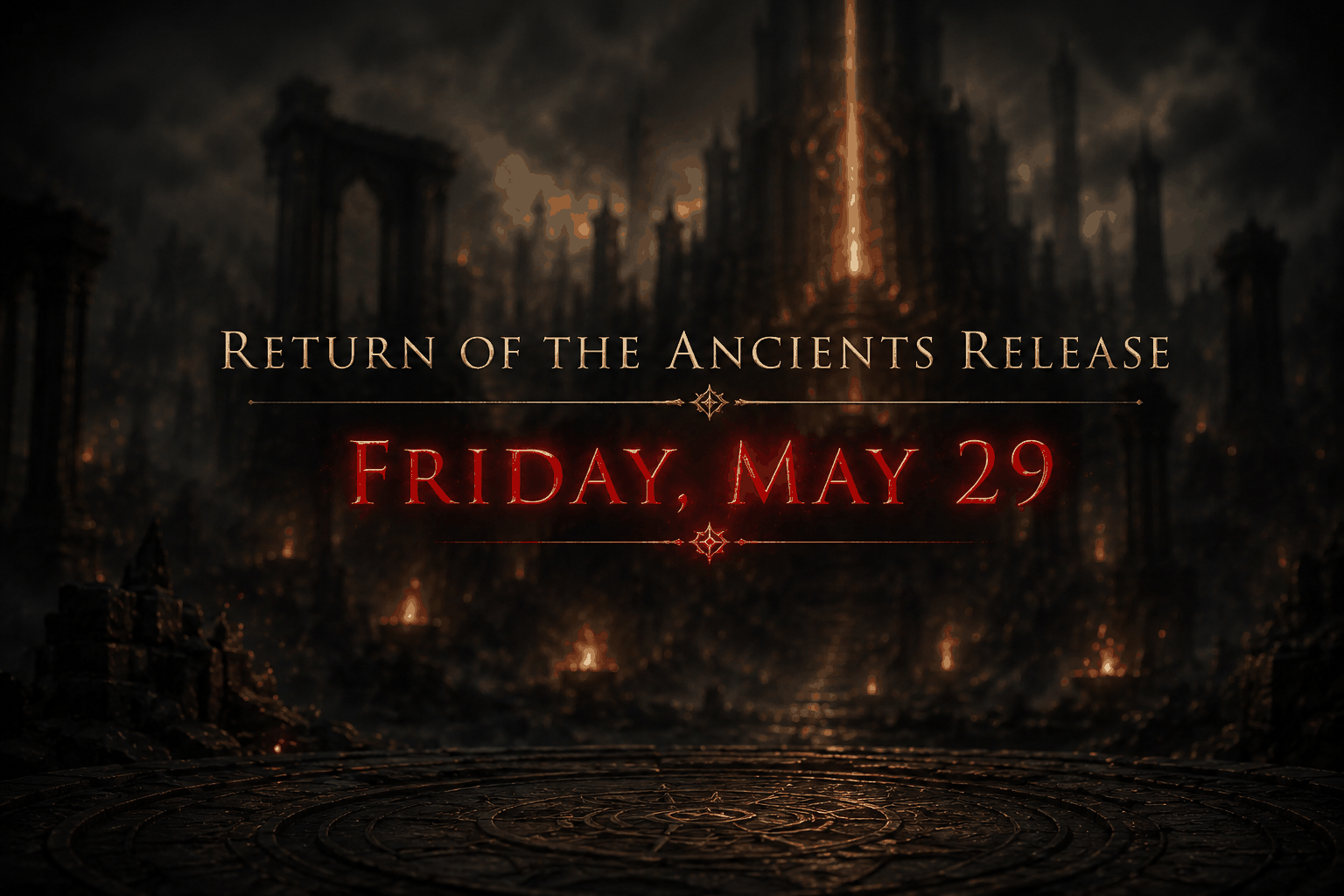
Patch 0.5.0 drops Friday, May 29. Here are the start times that matter:
| US West (PDT) | 1 PM |
| US East (EDT) | 4 PM |
| UK (BST) | 8 PM |
| Central Europe (CEST) | 9 PM |
| Moscow (MSK) | 11 PM (May 29) |
| Beijing (CST) | 4 AM (May 30) |
| Sydney (AEST) | 6 AM (May 30) |
Expect a maintenance window before the doors open, so do not count on logging in the instant the clock hits. Preload the moment GGG makes it available and you skip the launch-day download crush. The Runes of Aldur challenge league starts at the same time as the patch, which means a fresh economy, a clean ladder, and an open race to maps for every single player.
Why this league is a bigger deal than the usual reset
This is not a throwaway quarterly league. Return of the Ancients bridges directly into the finished game, so the systems and balance landing here are the ones that define Path of Exile 2 for a long stretch. The builds that work now carry into 1.0 with minor tweaks. That makes this a league worth actually investing in rather than treating as filler.
It is also the final time new Ascendancy classes get added before launch. That alone makes the two new ones worth a serious look.
The two new Ascendancies
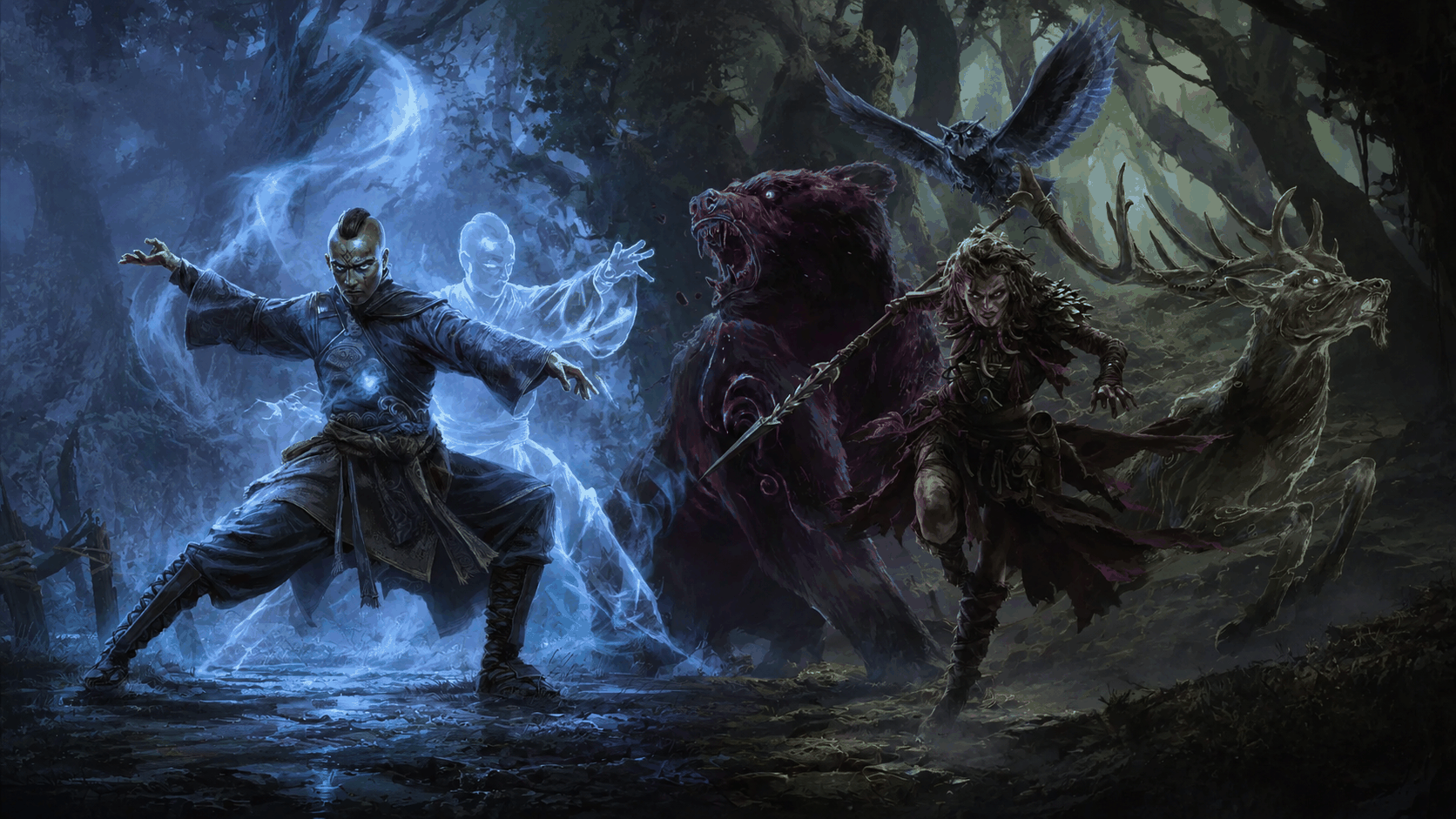
Spirit Walker (Huntress)
The Spirit Walker bonds with Azmeri animal spirits and draws power from several at once, each tied to a notable you allocate:
- Stag: lets you summon packs of animals when you attack.
- Owl: grants feather blessings that add extra projectiles and increase projectile speed for your next skill.
- Bear: summons a giant bear companion to fight alongside you.
The standout twist is the Natural Order option, which lets the Spirit Walker use Tame Beast on unique beast-type monsters, like the legendary monkey you fight in Act 3 and bind them to your side. That opens a whole category of companion builds. You can also attune to all three spirits at once, which unlocks a secret notable you cannot get any other way, granting bonuses for each spirit type. If you like minion or pet playstyles, this is your class.
Martial Artist (Monk)
The Martial Artist is a master of illusion and unarmed combat. It creates illusory copies of itself that perform your chosen skill, which is perfect for taking a small-area-of-effect skill and turning it into something that wipes packs. Its Hollow Resonance technique mounts a bell on the character's back that rings on every critical strike, dealing damage to everything around you. It can also etch runes directly into its own body along its meridians, channeling internal spiritual energy.
This is the aggressive, high-skill-ceiling melee option. It looks like a blast to pilot and probably a little demanding to pilot well.
There is also a new upgrade path for the Acolyte of Chayula, plus reworks to Chronomancer and Gemling Legionnaire, so existing characters are not left out.
A quick note for anyone who saw the reveal art: the expansion was teased with a sword, but there is no Duelist class in 0.5.0. The remaining classes are expected at 1.0 or ExileCon.
The Runes of Aldur league mechanic
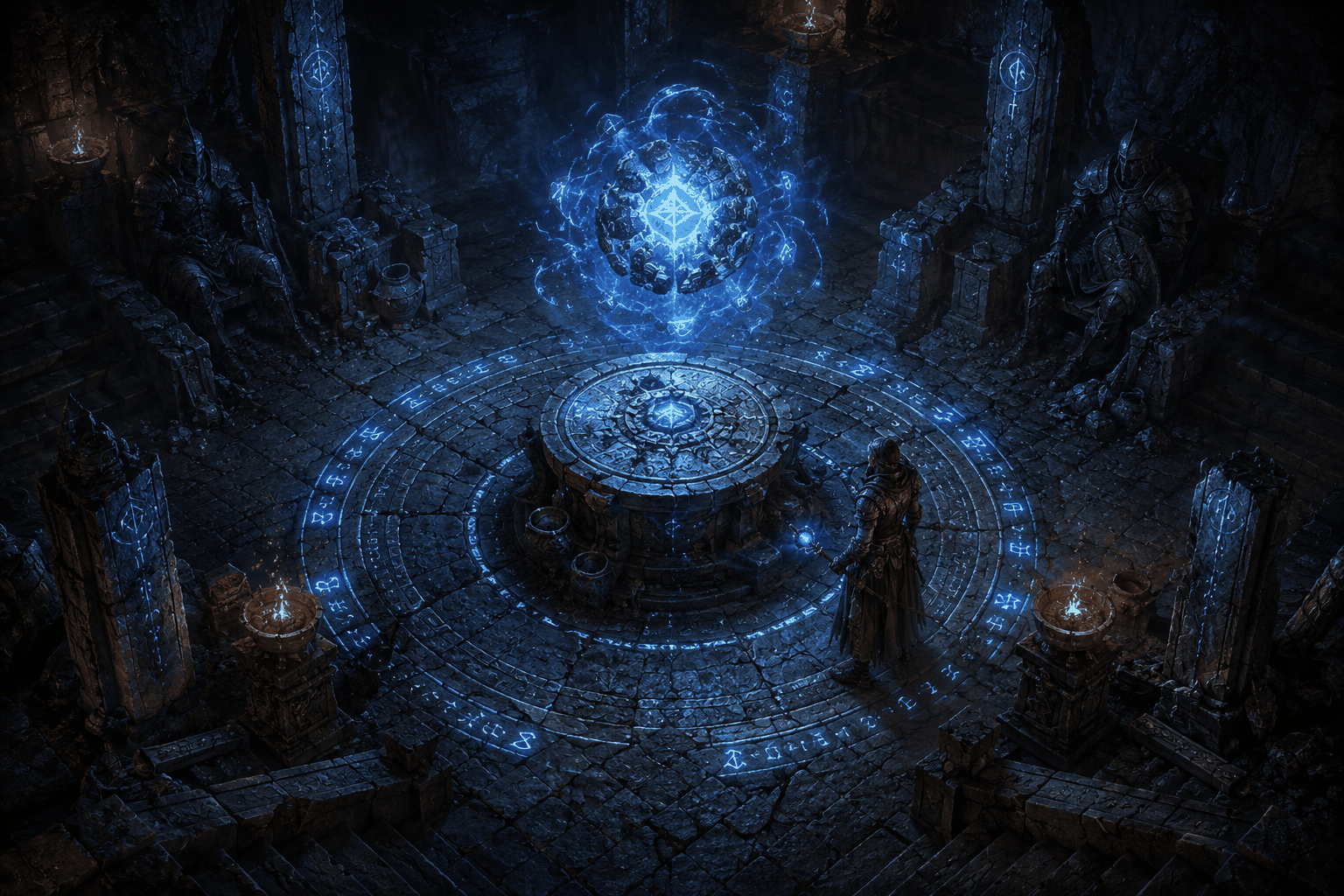
Early in the campaign you meet Farrow, a young smith trying to revive an ancient form of rune-smithing he records in his Book. Every zone in the league contains an Ezomyte Remnant, an object with partially filled rune slots. You choose which runes fill the empty symbols, that sets the item reward, and defeating the monsters the Remnant spawns lets you claim it.
The risk/reward is built right in. Activating runes resurrects nearby dead, who return buffed according to the runes you picked. Higher-level areas have Remnants with more slots, which let you craft rarer and more powerful items but raise both the number of enemy waves and the difficulty of the fight.
Some examples that show how the system thinks:
- The Soul rune makes the souls of slain monsters pass to another monster on death, growing it stronger each time. The last monster to absorb every soul can become a serious threat.
- The Oath rune turns one monster into an invulnerable leader that spawns waves of minions. You cannot hurt the leader directly, so you damage it by killing its minions.
Some recipes need six to eight runes, but you do not have to memorize anything. Every recipe you discover is automatically recorded in Farrow's Book and stays available forever.
This is also the first league with a proper challenge set. Clear 2, 4, 6, and 8 challenges to earn pieces of the Knight of Aldur armour set, available only this league, plus totem decorations for your hideout that permanently display how far you got.
Runic Ward and the new crafting layer
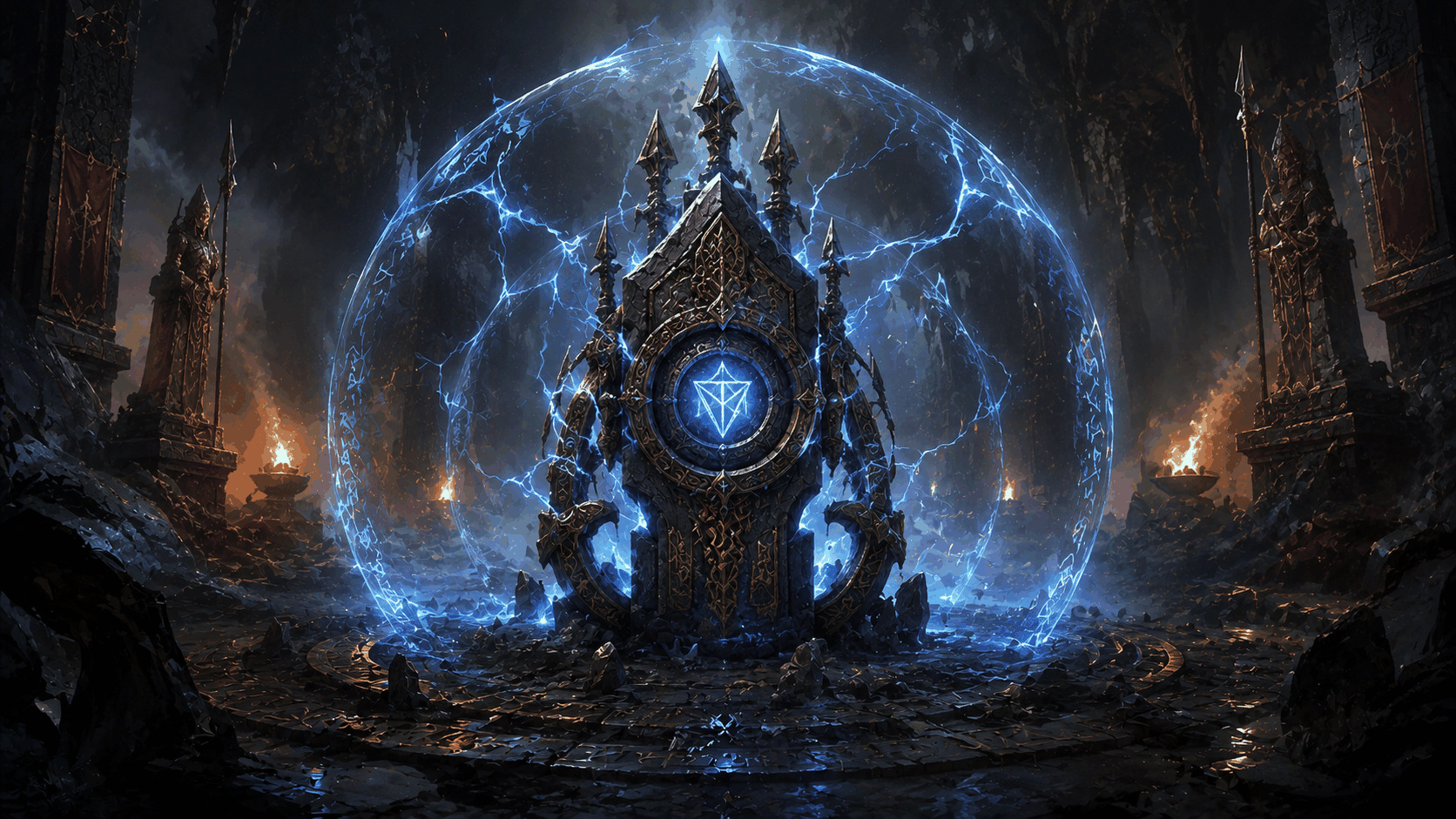
Farrow can also forge a special rune power into any armour, adding Runic Ward, a second defensive resource. It works like a backup life pool: when you take what would be fatal damage, it activates and lets you recover. If the incoming hit exceeds your Ward, you still die. It goes on any armour including uniques, sometimes as a simple add-on, sometimes by sacrificing base defense for a huge Ward value, sometimes by adding entirely new modifiers.
On top of that come rune skills that spend Runic Ward instead of mana and have no colour requirement, like Frostflame Nova, which freezes and ignites at once. And Runic Supports, which combine old gems with new runic ones: Concussive Runes add shockwaves to stunning skills, Runic Infusion spends Ward for a direct damage boost.
The crafting additions are where the patch's personality really shows:
- Over 100 new runes plus a pile of other new crafting currencies.
- An element-conversion rune that flips every mod on a non-unique weapon from one element to another, so you can fuse a weapon with all three elemental mods into a single element for an enormous single-element damage number.
- A Masterwork rune you stack on top of an existing rune to raise its tier.
- Meta-crafting runes that unlock new mod pools. Rune of Chronomancy, for instance, unlocks time-related mods for crafting on boots, after which you use normal crafting orbs to roll for skill speed and duration mods.
- In Act 3, the ability to reforge unique weapons for significantly higher damage, which makes many low-level uniques viable in the endgame. Kalguuran uniques can be reforged too.
And one removal worth flagging for build planning: the Recombinator is gone, replaced by what GGG calls more reliable options.
The endgame overhaul
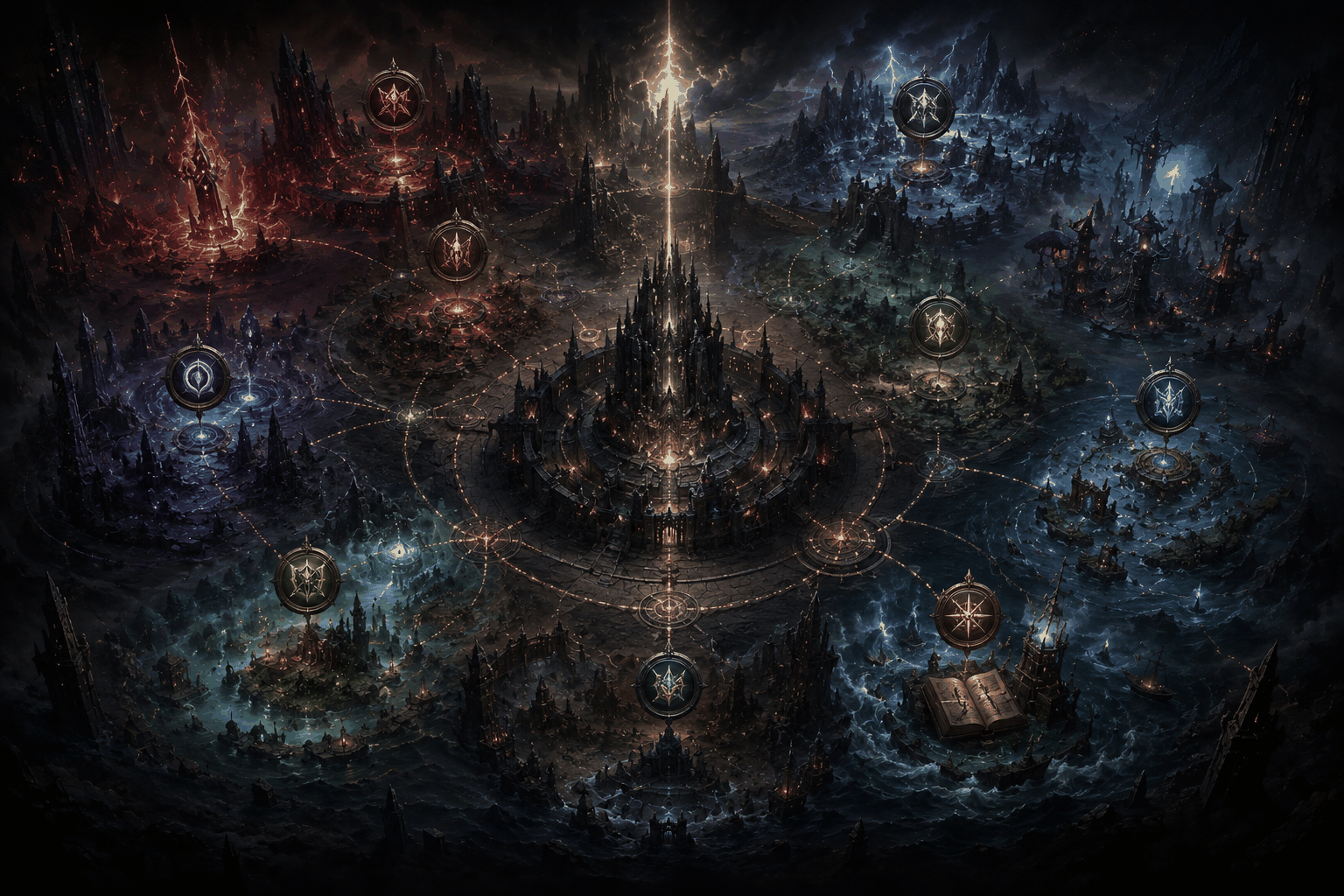
This is the part veterans have been demanding and it is enormous. The central new storyline is Origins of Divinity, which explores the mysterious Precursors and the First Edict. Complete your first tower and a giant Fortress rises from the earth, locking off regions to explore within. You break in, activate the gates, collect keys to reach the ancient Precursor weapons, and disarm them. The Fortress is packed with new mechanics, new enemies, and dark secrets.
Here is the twist longtime players need to know: the Arbiter of Ash, the old top pinnacle, has been dethroned. It now has a fixed early spawn to smooth out progression, but it is no longer the main boss of the core Atlas. A new, larger threat has arrived, and GGG is keeping it deliberately mysterious. More on the full boss lineup below.
The headline structural changes:
- The Atlas Passive Tree expanded to over 300 nodes, and you can now fully allocate every one of them. Because of that, GGG removed Atlas tree respeccing entirely. Fortress maps grant the points, replacing the old method completely.
- Fixed points of interest in specific locations give clear goals that are easy to find. Each core mechanic has a guaranteed home, like a large cluster of Ritual maps west of your Atlas start.
- A replayable ocean. Kingsmarch has been largely destroyed and now sits off the coast, providing a replayable version of Act 4. You scout islands using Logbooks to find the missing NPC Gwennen, each island carrying its own special mechanics.
- 30 new endgame map areas.
- Special Fortress map mechanics, like an Azmeri spirit that hops to a new rare monster each time you kill its host, letting you chase a chain of buffed enemies across the map.
Masters of the Atlas
Sitting on top of the now-fully-unlocked tree is a second customization layer, and it is the smartest addition in the patch. Three masters, each acting like an Atlas-tree Ascendancy:
- Jado, of the Order of the Djinn, sends you to recover artifacts and specializes in high-variance outcomes: better corrupted item rolls, stronger map modifiers with bigger rewards, and unique drop-rate bonuses. The gambler's master.
- Hilda, of the monster hunters' guild, sends you to kill specific deadly creatures and specializes in powerful enemies and their loot, with options that, for example, stop Azmeri wisps from possessing rare enemies so they only buff uniques like the map boss, raising both difficulty and reward.
- Doryani, the third master, focused on his own science questline unlocked by clearing a corruption nexus.
Each master has 12 nodes across four rows. You can have all three masters allocated at once and swap between up to four active nodes freely before every map. You unlock rows by completing each master's missions.
The five reworked storylines
Instead of bolting the old league mechanics onto random maps, GGG turned each one into a full questline with its own area, crafting system, and pinnacle boss. There are five:
- Origins of Divinity (the Fortress, covered above), the central arc and home of the new top-end Atlas threat.
- Breach, essentially replaced with Keepers of the Flame content. Encounters now start as Unstable Breaches with a timer bar, and the new crafting system, the Genesis Tree, lets you bias item bases and mods using Hiveblood and Wombgifts. Genesis Tree points respec for free. It builds toward the Breach pinnacles, Tul and Esh.
- Delirium, now a hunt for Tangmazu, the Raven Trickster. You free Elder Madox from his spell, push a madness bar deeper for higher difficulty, and work toward the Simulacrum and a new pinnacle. Liquid Emotions can now add mods to jewels.
- Ritual, leading to the King in the Mist, who like the Arbiter is no longer the final boss. Beating him pushes you through the Ritual of the Nameless into the Wildwood to face a new threat. Ritual rewards are now guaranteed to be uniques or omens.
- Expedition, expanded into the ocean. The Runes of Aldur content turns out to be Kalguuran in origin and blends into Expedition from Act 4 on.
Every new boss and pinnacle in Return of the Ancients
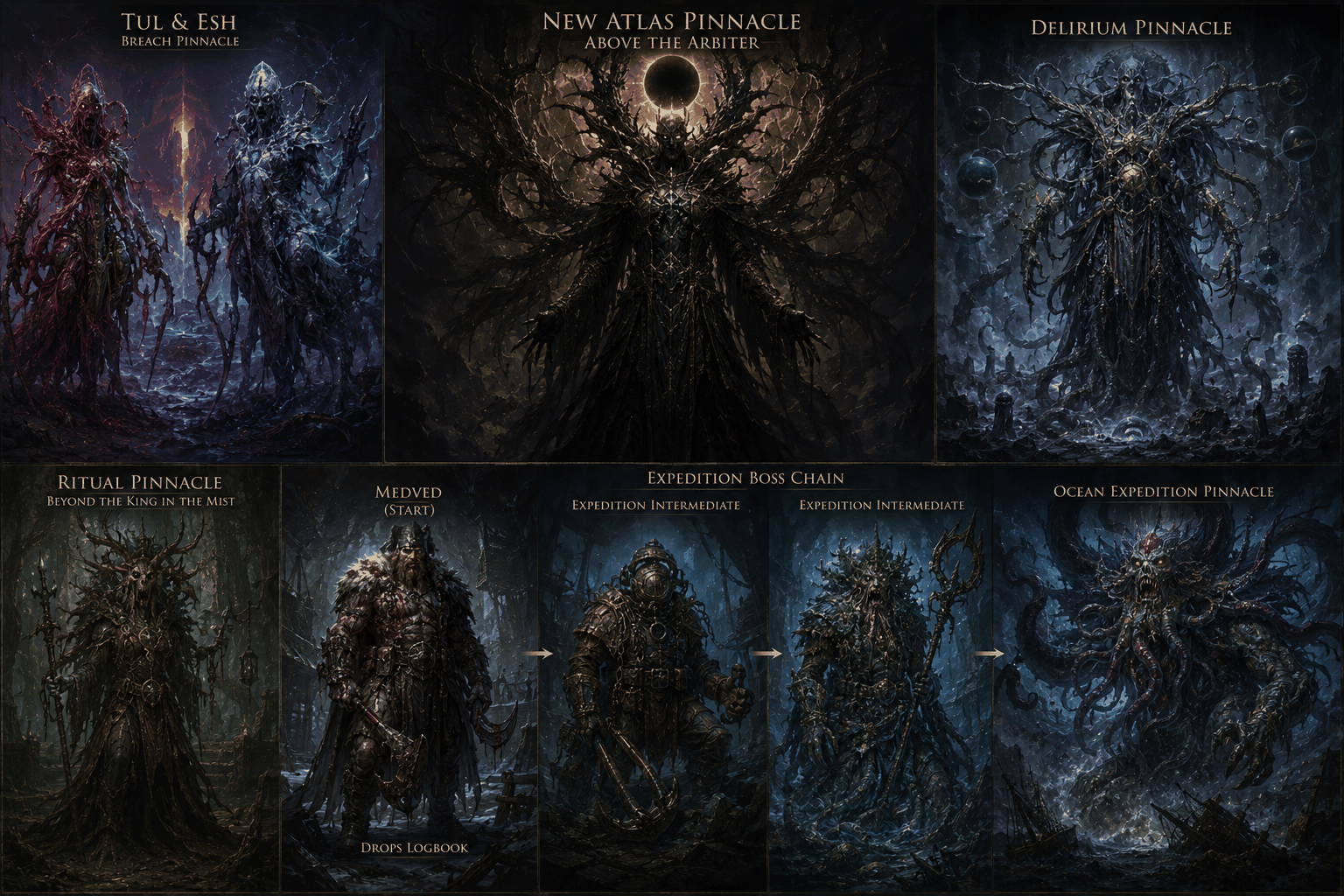
If you came to this update for things to kill, you are covered. The reworked storylines each cap off with their own pinnacle, and the patch adds a large batch of new bosses across the endgame.
The headline is the dethroning of the Arbiter. The Arbiter of Ash, previously the top of the food chain, is now an early fixed-spawn fight, and a new and larger Atlas threat sits above it. GGG is deliberately not showing this one off, which is the kind of thing that gets dataminers and theorycrafters writing, so expect it to drive a lot of launch-week buzz on its own.
The confirmed new pinnacles, by storyline:
- Breach: Tul and Esh, reached through the Hiveborn infestation and Breach Fortresses, after defending the NPC Ailith from waves of Hiveborn.
- Delirium: a new pinnacle reached by completing the Simulacrum at the end of the Tangmazu hunt.
- Ritual: a new threat deep in the Wildwood, past the King in the Mist.
- Ocean Expedition: a boss chain that starts with Medved, who drops a Logbook on death so you can continue to the other Expedition bosses, ending at a brand-new pinnacle for the mechanic.
On top of those, the Spirit Walker can flip the script on certain bosses entirely. Its Natural Order option lets you tame unique beast-type monsters, like the Act 3 monkey, and turn what used to be a wall into a permanent companion.
For your league start the bosses matter for two practical reasons. The Knight of Aldur challenge set includes tasks that point you at the available pinnacles, so engaging with them is part of earning the free armour. And several build-defining uniques drop from specific bosses, so factor the relevant fights into your gearing plan rather than hoping they fall into your lap.
What got nerfed and buffed
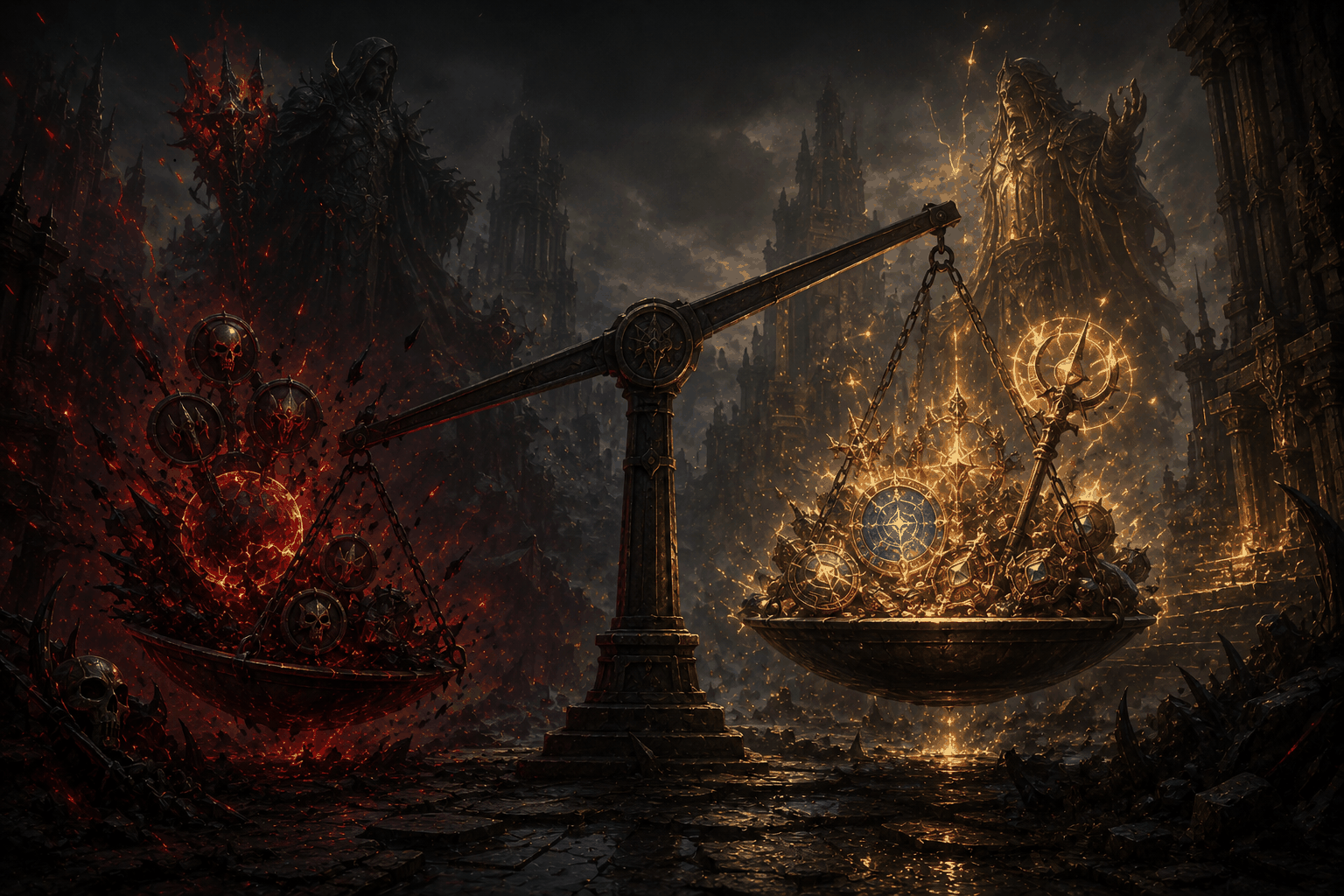
GGG dropped the full patch notes on May 21 and they are massive. The short version for build planning:
Nerfed: Cast on Critical, gem rank scaling, and item rarity affixes all took hits. Poison Pathfinder, a dominant 0.4 build, got attacked from several angles at once.
Buffed: The Atlas Tree, the new boss content, and the Ascendancy reworks all came out ahead. Add over 20 new support gems and more than 30 new uniques and there is a lot of fresh build space. One already drawing attention is Raven's Flock, a new staff that grants an effect similar to Righteous Fire from the original Path of Exile.
The takeaway is simple. Do not copy last league's meta build off an old tier list. With nerfs this heavy, some of those builds no longer exist in the same form. Read the actual notes.
Quality of life worth knowing about
Several changes smooth out the grind:
- In-client build guides. Community authors can publish .build files that show passive trees, gem choices, item recommendations, and level-by-level notes directly inside the client.
- An Atlas map search bar, long requested, for finding content in the endgame.
- Click-to-price items, which opens the in-game trade site so you can check value instantly.
- Navigation markers and trails throughout the campaign.
- A Fragment Stash Tab, finally.
- Faster party revives and expanded companion interactions.
So what is GGG actually doing here
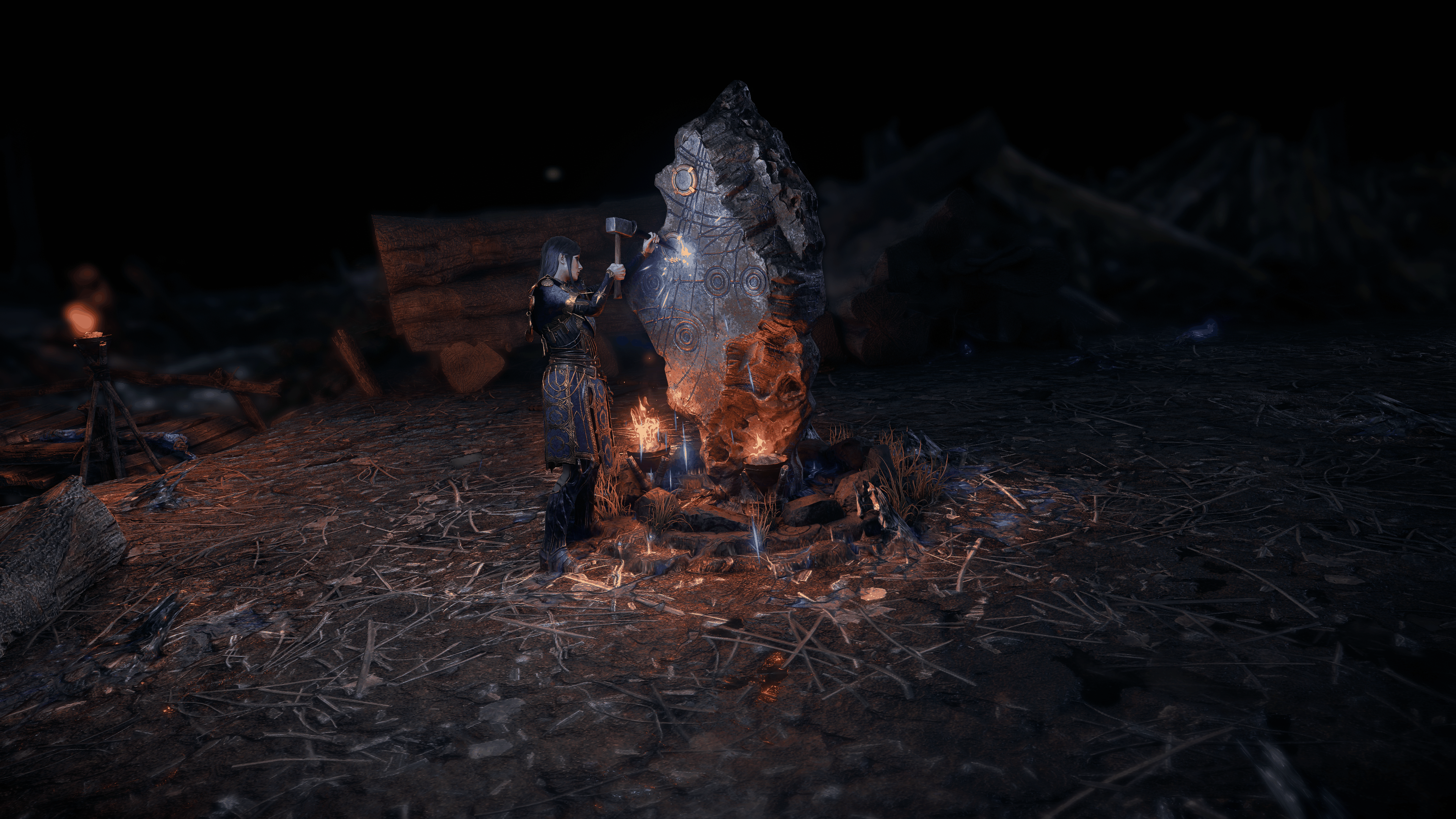
Now the part I actually want to argue. Stack these changes up and a pattern emerges that is bigger than any single feature.
For years the Path of Exile pitch was friction. Random maps, an Atlas tree you could never fully fill, crafting that was a slot machine, an endgame you discovered rather than followed. The build was the act of choosing what to give up, and that tension was the point.
Return of the Ancients quietly dismantles a lot of that. You can now allocate the entire Atlas tree, so respec is gone because you never permanently sacrifice anything. The endgame hands you a quest log instead of a fog to push into. Crafting moves from "spin and pray" toward "plan and execute" with a Runebook that makes sure you never even lose knowledge. Build guides load inside the client so a newcomer can import a working character.
That is not a random pile of features. That is a game systematically lowering its barriers to entry right before its full launch. GGG is sanding down the parts of Path of Exile 2 that punished people for not already being experts.
I understand exactly why. The most common complaint about the endgame was that it felt aimless after the campaign. Players hit maps and asked "now what." Origins of Divinity is the answer, and game director Jonathan Rogers was strikingly blunt about the reasoning. He pointed out that a large share of the game's negative Steam reviews come from players who sink 200 hours in and then leave a bad review, because there was no obvious endpoint, so they just kept grinding until it stopped being fun. His fix is almost paradoxical for a live-service game: he said GGG actually wants you to quit at some point, to reach a moment where you feel done and satisfied and can step away happy before the next league rather than grinding yourself into resentment.
That is the whole patch in one quote. The storylines exist to give the endgame an ending. But it is worth being honest that the fix trades away some of the open-ended texture that hardcore players loved. A better on-ramp and a clean finish line in exchange for a more guided experience. For a game about to chase a much larger 1.0 audience, that is a rational trade. It is also a real one, and some veterans will feel the loss.
Here is the part I think is smart, though. They did not remove the depth, they relocated it. Masters of the Atlas is a whole second customization system layered on top of the now-unlocked tree. The complexity did not vanish, it moved from "punishing to access" to "rewarding to optimize". You no longer suffer to reach the depth, you reach it and then play with it. That is the right way to run an accessibility pass: raise the floor, keep the ceiling high.
What this means for you on May 29
Returning player who quit because the endgame felt like a chore: this is the patch to come back for. The friction you remember has been heavily filed down, and there is a real destination now.
New player: the in-client build guides and the guided endgame make this the most welcoming PoE 2 has ever been. There will not be a better on-ramp before 1.0.
Veteran chasing the ladder: the calculus shifts. Full tree allocation and deterministic crafting mean the early edge moves away from "who knows the obscure paths" toward "who executes the opening fastest." The knowledge moat is shallower, so speed to maps matters more than ever.

How to prep for the start
A short checklist for not fumbling the opening weekend:
- Pick your build before launch off the new patch notes, not last league's tier list. With nerfs this heavy, old guides are a trap.
- Decide between a new Ascendancy and a known quantity. Spirit Walker and Martial Artist look strong but unproven. If you want a guaranteed-smooth start, a reworked or stable existing class is the safer league-starter.
- Plan your currency early. The new Verisium and runeforging systems reward players who understand them fast.
- Run the Fortress storyline early. Those Atlas points are the foundation of your whole endgame, and the tree is too good to leave half-empty.
- Preload the patch the moment it is available.
Skip the slow part and start where the league actually changed
Here is the honest truth about league start. The campaign is the same six acts you have already run, roughly fifty hours of content you have seen. The new stuff, the Fortress, the ocean, the runeforging, the economy race, all of it lives in the endgame. Every hour you spend in Act 3 again is an hour the fast movers spend banking currency at peak prices.
That is exactly where we come in. Our Path of Exile 2 campaign boost clears all six acts so you land in maps while the league is fresh and prices are still high. Pair it with PoE 2 powerleveling to hit endgame fast, and if you want to test one of the new Ascendancies without the early grind, our Ascendancy Trials boost handles the Trial of the Sekhemas and later trials so you unlock your specialization on schedule.
Need to fund those new runeforging crafts or grab a starter build's core uniques? We cover currency farming and Atlas and map progression too. Or just rent a pro by the hour and point them at whatever you need most. Everything runs in selfplay or piloted mode, all drops stay on your character, and our boosters are PoE players who already know the new league cold.
Return of the Ancients is the clearest statement GGG has made about what Path of Exile 2 is supposed to feel like at launch. Less punishment, same depth. Whether that is your game is worth deciding before you roll a character. Either way, the people who plan the opening win the league. See you in Vraeclast on the 29th.


 Home button in top-left corner of discord.
 at the side bar.
 button in top middle corner of Discord.